Beyond Justifying: How To Read the Bible For All It's Worth

Sunday, July 17, 2016

There are two basic ways we can approach living out the teachings of Jesus and our own spiritual and moral growth and development. One is by seeking to justify the morals we have now, and the other is by seeking to grow deeper. While you can probably guess that I’m going to advocate for the second, the first approach of “justifying” is far more common among evangelicals – and that’s true for both conservatives and progressives.

A common example of this “justifying” approach can be seen in how many Christians seek to deal with parts of Scripture that they find problematic. Let’s say for example you read somewhere in Paul’s writings something like “women should shut up because men are better” (or something that sounds like that to you anyway), and you think “what the hey!?” The justifying approach will look for a way to justify your not following this. For example you might say “many scholars believe that Paul did not actually write this book, so therefore I can ignore it.”

Or to take another example you might read Jesus saying something that sounds to you like “Do not protect or defend yourself or your loved ones when they are hurt by someone. Blessed are those who passively tolerate injustice” (again, I’m expressing more how the verse feels, rather than what it actually says). Again, the approach of justifying might seek to say something like “When Jesus spoke of turning the other cheek he was not referring to personal self-defense” or if seeking to defend the military one might say the opposite “When Jesus spoke of turning the other cheek he was only referring to personal self-defense, not to the state.”

This is not to say that the justifying approach is incorrect. It may very well be that Paul did not write such-and-such book, and it may be quite true that Jesus was not specifically referring to the particular situation we have in mind today – indeed literally everything you read in the Bible was said to a different people in a different situation in a different time in a different language. However, the goal we have with the Bible is to ask “How can I apply this to my life?” and more specifically “How can I apply the way and teachings of Jesus to my life?” That’s kind of the whole point of following Jesus. That’s pretty much the main reason we bother to read the Bible at all. The approach of justifying, however, instead seeks to do the opposite of that. It seeks to find ways to justify not applying it. That’s why as a general approach I think it not a good one, or at least I think there is another approach that is much better.

I also want to stress that I am not saying that the justifying approach is illegitimate. If you as a woman don’t want to be quiet and submit, I can totally relate. I also relate to wanting to defend myself and those I love. To take it even further, I can certainly understand why a person who is attacked could respond with violence. I feel the moral drive as a parent to defend your family. I think one can legitimately claim that it is justifiable, in certain circumstances, to use violence in order to protect. We can make similar arguments with many things – for example we can say it is justifiable to get a divorce in certain circumstances.

The point is not to deny that it is legitimate to see this as justifiable. But what I want to do is ask if we can go beyond this, if we can do something better. I’d like to sketch out what that might look like.

First of all I begin with a simple rule of thumb: If the way I am interpreting the Bible seems wrong and bad and hurtful to you, then I stop right there. Don’t do something that you feel is hurtful. That means that in the above examples where you hesitate because it seems wrong to not to defend yourself, that’s a good instinct. Pay attention to that. Your life matters. Injustice is not okay. That is perhaps not where we will end, but it is certainly where we need to start.

The next step is to entertain the possibility that if it seems to me that Jesus is saying something that seems foolish, naive or even bad, that just maybe it is not the case that Jesus is naive and dumb and wrong, and quite possible that actually he is saying something that is morally over my head. So I need to seek to get to the place of actually understanding how I could take what Jesus is saying and apply it to my situation in a way that leads to moral transformation. That is, in a way that takes me out of the typical loop I get stuck in, and brings me out of that, above it. In other words, I need to appreciate how Jesus is showing me a better way, and really get how that could work in my life. If we can begin to ask this question as we immerse ourselves in the teachings of Jesus and the New Testament, if we can have this question on our lips as we open our hearts to listen to the leadings of the indwelling Holy Spirit, then we open up a whole world of possibilities to walk in the way of reconciliation and peacemaking that Jesus embodied and calls us to as his followers.

Conversely, when our only response to Jesus is to seek to justify our hurtful actions, to say “Yes, but what about...” (fill in the blank with whatever horror scenario gets you emotionally triggered, so your amygdala is flooded, and all rational conversation is completely shut down). When we do that, we close the door to finding any other possibility besides the one where we justify hurting someone else. That results in moral stagnation. It means we close the door to learning another way. We close the door to doing better, to growing morally, to making our world more into the kind of place that Jesus prayed for “your kingdom come, on earth as it is in heaven.”

So how can we move towards doing that? The first step is to get past seeking to justify not doing it. Rather than continually rehearsing all the emotionally upsetting scenarios where we think we are justified in being violent, rather than continually asking “but what about...?” what if we instead spent our energy trying to figure out how we could apply the way of Jesus in our own live contexts and situations? When groups like the Mennonites have attempted to do that, they have come up with really groundbreaking, society-transforming ideas like restorative justice. That’s exciting, and I want to be doing that. I want to be morally innovating and creating, rather than spending my time seeking to justify why I am not.

I think I get to say that. After all, I’m the guy who wrote a book on how it’s okay to “pick and choose” what parts of the Bible will shape and guide us morally, and which parts do not. So one could think that I would be all for the justifying approach. After all, I am, to an extent, providing a justification for not following certain teachings which we determine are hurtful (or at a minimum, certain interpretations of those teachings). Again, those justifications are legitimate. They are a good place to start, but a bad place to stop. So I maintain that we must go beyond this. In fact, the only reason I still read the Bible is in the hopes of going beyond this. I read in the hope that I can connect with the Spirit who will lead me into a deeper understanding of the way of Jesus that can transform me and my world.

That’s the attitude, and it’s a critical starting position. But let’s get to the practical. What does it look like? On a very simple level it begins by simply asking “How can we do better?” and “What are ways to reach the goal we have without harming anyone?” or at a minimum “How can we work to reduce harm?” Yes, we can justify divorce for instance. But is there a way to save the marriage, restore the relationship, and keep the family together? If there is, shouldn’t we seek to do the hard work to get there? Yes, we can justify violence used in self-defense, but if there is a way to resolve conflict peacefully, shouldn’t we seek to learn how to do that? If there was a way to reduce the amount of deaths due to guns in our country – whether from suicides, mass shootings, gang violence, or police shooting unarmed people of color – shouldn’t we seek to do everything we can to learn how to do that?

Yet so often, rather than working together to do that, what we find are people who feel the need to instead justify keeping things the way they are, and as a result actively block others from working to make it better. What I want to state is that this is not a good way to “defend” morality because it ends up in stagnation and status quo, and prevents growth and development and healing. We need to go beyond justifying things, and instead learn how to seek to make things better. That is where Jesus was trying to take us when he said all of his “I know it says... but I say to you” and “don’t even the unbelievers already do that?” statements. He wanted us to go beyond status quo religious morality, and “be perfect” which in Hebrew means to take something to completion.

Why is it that we gravitate towards seeking to justify, rather than seeking to improve and go deeper? A big factor is the feeling that we need to defend ourselves from blame. Every child does it. You could almost say it comes hardwired into us. “He started it!” we learn to say. Yes, I absolutely am implying that justifying is an immature response because it absolutely is. I’m guilty of it, too. We all are. But I don’t want to justify that (see what I did there?). I want to instead seek to follow Jesus, who calls us instead to the way of repentance and humility, rather than the way of justifying ourselves. That’s just Gospel 101, people. Moreover, Jesus calls us to be at the forefront of working to bring about peace in our world, to be ambassadors of reconciliation, to demonstrate the same kind of love Jesus did. That’s our calling, our mission.

I think that’s an exciting possibility, to be in the place of moral innovation, to be active in pushing ourselves and our world towards being more humane, more loving, more like Jesus. I also think it opens all sorts of doors into really encountering the divine in the Bible, allowing us to read in a way that deepens and challenges us. I hope you find that as exciting as I do, and will join me in going beyond justifying ourselves. Let’s stop asking if there is a way for us to justify not applying the way of Jesus to our lives, and instead seek to find how we can. Jesus tells us that way is life. Let’s not rest until we understand why that is true.

Labels: , ,

Crumbs From The Table - A New Kind Of Perfection

Saturday, January 16, 2016

The Gospels present the radical idea that, in Jesus, God is revealed in human form. For the Greco-Roman mindset this was a scandalous idea. Humans were thought to be impure, and so the idea that God could have a body was offensive and shocking. Understanding this goes a long way to understanding why the theological debates of the first church councils revolved around the humanity of Jesus, and the pull to see Jesus either as only divine or as only human. Against these tendencies the early church stressed that Jesus was both fully human and fully divine.

In general, the tendency to think of God as detached from the corruption of human affairs is a Greek idea, while seeing God in more emotional human terms reflects Hebrew thinking. We get the idea of God as the "unmoved mover" from Plato, while the Hebrew prophets paint a picture of God -- to borrow a phrase from the late Clark Pinnock -- as the most moved mover

Because subsequent Christian theology has been so deeply shaped by Greek thinking, the image of God found in the Gospels in the person of Jesus still can come as a shock to our thinking. We have a tendency to want to sanitize the picture we find. 

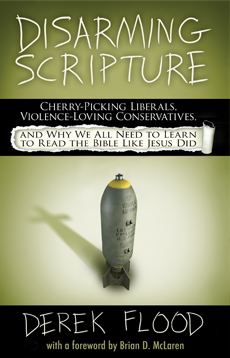
One example of this that I explore in Disarming Scripture is how Jesus is seen by the Gospel writers as being sinless, but is nevertheless presented as being accused of being a sinner by the religious authorities of his day. A typical response to this, employed by many a Greek-thinking Bible commentator, is to deny that Jesus actually broke any laws. But that is not what the Gospels actually say. By their account, Jesus did break commandments, and in fact did so in clear defiance of the religious authorities. So the picture we have from the Gospels is that the way Jesus was sinless involved breaking certain commandments in the name of compassion. In other words, faithfulness to the ultimate aim of the Law required breaking the Law.

In this post, I'd like to focus on a passage that is perhaps even more challenging to our Greek-thinking bias. The Gospel of Mark (Mk 7:24-30) tells the story of a Syrophoenician woman who asks Jesus to heal her daughter. Jesus tells her that "It is not right to take the children's bread and throw it to the dogs." and she replies, "Yes, Lord; yet even the dogs get the crumbs that fall from the table." Jesus is so impressed by her retort that he changes his mind, in effect repenting, and heals her daughter.

To my knowledge, this is the only time recorded in the Gospels where Jesus loses a verbal exchange, where Jesus is "bested" by someone else, where they get the punchline. Typically, Jesus is able to reply to every challenge of the Scribes and Pharisees with some brilliant zinger, like "Give unto Caesar what is Caesar's, and to God what is God's" (Mk 12:17) or "Let he who is without sin cast the first stone" (Jn 8:7). If the Gospels were a sitcom, you'd hear the studio audience laughing after every line Jesus says, and it's highly likely that the crowds hearing his brilliant retorts did laugh. Today we would say "Oh, snap!"

But this time was different. This time it is the woman who wins, and it is Jesus who repents.

This is hard to take. The implication is that Jesus is not only being rude in calling her a "dog," but also racist in saying that one ethnicity (his people, the Jews) are more deserving of God's care than outsider Gentiles are. Perhaps to underline this, in Matthew's account (Mt 15), the ethnicity of the woman is said to be a Canaanite, the long-standing enemies of the Jews. In essence, an "unclean" person comes to Jesus, asking for mercy, and Jesus initially refuses. But she persists, and Jesus agrees.

Again, many commentators attempt to soften things. One of my favorites is to claim that the Greek word Jesus used really means "little puppy" as if Jesus were saying something adorable rather than insulting. For example, in the notes to the NET Bible we read

"The diminutive form originally referred to puppies or little dogs, then to house pets. In some Hellenistic uses κυνάριον (kunarion) simply means “dog.”

The term dogs does not refer to wild dogs (scavenging animals roaming around the countryside) in this context, but to small dogs taken in as house pets. It is thus not a derogatory term per se, but is instead intended by Jesus to indicate the privileged position of the Jews (especially his disciples) as the initial recipients of Jesus’ ministry."

I have to say I find this explanation really a stretch. Even if Jesus is indeed softening the Jewish habit at the time of referring to Gentiles as "mongrels," and instead is calling them simply house pets, it still implies an acceptance of the idea that people of her race (Gentiles) have less value in the eyes of God than people of his race (Jews), just as a house pet has less value than a child.

More to the point however is that the story does not end here, but continues to present a picture of Jesus losing a moral argument and repenting. This is of course difficult because the Gospels tell us that Jesus is the picture of moral perfection. So how can it be that the Gospels present Jesus as being morally in the wrong here?

There are a number of approaches to understanding this. There is the fundamentalist option of seeking to justify the actions of Jesus, claiming that God has in the past restricted salvation to only the Jews, but that in Jesus this had changed and salvation was made available to Jews and Gentiles alike. This is the least plausible of all the options. Are we really to believe that God had ordained this change in dispensation, apparently beginning at the precise moment the woman made her retort, and taking Jesus a little off guard? 

Then there is the secular-liberal option of claiming that Jesus was simply a fallible human, and thus subject to being immoral like all of us. While more plausible than the fundamentalist option above, this is the least attractive of all the options. It seems to miss the whole message of the Gospels, saying "Sorry, nothing to see here, just move along." It's depressing and has little to offer other than disillusionment.

Finally, there is the option that you might call "nice Evangelical" which is an option that folks like me tend to gravitate towards. It seeks to explain how what Jesus said, while seeming insulting, really wasn't. The idea is that Jesus was only pretending to be prejudiced in order to draw out the conflict and build a bridge, crossing the ethnic divide.

This is indeed plausible, and attractive, and if you wanted to go with that, I wouldn't want to stand in your way.

But I'd like to propose something different, because I find it more challenging, and I want to allow the message the Gospels present of Jesus to challenge me, and resist the urge to sanitize it.

Jesus is supposed to be our model of moral perfection. That's an idea we get from the Gospels. So how can it be that Jesus is "corrected" by this woman in the Gospels? How can it be that we have in the Gospels a story where Jesus is presented as being in the wrong morally? We know that the Gospel writers did edit the stories of Jesus, so if their aim was to present Jesus as morally perfect, why did they include this story that a modern PR firm surely would have edited out?

What if the picture of moral perfection that the Gospels give us is not one of never being wrong, but presents us with a model of being open and able to grow? What if true goodness involves the ability to listen and learn and adapt, and even to... repent? What if this Gospel pericope were not an embarrassment that we need to seek to cover up or explain away, but a good example of what moral maturity looks like that the Gospel writers have purposely included to illustrate this idea for us?

I know that is challenging, but I think those are some crumbs worth chewing on.

Labels: ,

Why Read the Bible?

Tuesday, September 01, 2015

A common question I deal with in regards to the Bible is how one can move from an authoritarian reading to one that involves ethical/moral engagement and responsibility. I have written about that quite a bit. This time around however I want to address a question that comes at things from the other side, and asks basically "Why should we read the Bible at all? Why not just toss it in the waste bin?"

I want to stress that both of these questions, while coming at things from opposite sides, are really asking the same thing: How can I read the Bible in a way that leads to love? Both are asking about how we can have a moral reading of Scripture. They are just coming at the question from different starting places, and both hoping to arrive at a place that is good, arriving at a place that promotes love and faith, and is characterized by moral maturity.

So let's dive into the question asked by a reader which I think captures the dilemma quite well,
“The question I have is, If the Bible more times than not leads us to a misunderstanding of God, why give it such preeminence in one's relationship with him, especially after we come to a realization of God as love?...

I would agree that IF we are going to use the Bible, we need to read it through the lens of love... I just don't see the benefits of continuing to base my revelation of love on a book that more times than not won't get me there.”

Great question. Let's start by putting things into some perspective: Remember that the Bible is not the goal of our faith, Christ is. Christ is not a concept we find in a book, or set of teachings. Christ is alive. We are seeking a living connection with the one who is life, and truth. Through that living connection we are relationally formed into Christ’s image. Not by doctrine, but through relationship.

The Bible is a vehicle whose purpose is to lead us to Christ. If we find that it leads us away from Christ, away from loving action, away from compassion, and towards hurtful things—like self-loathing, hard-heartedness, and ungrace—then we need a change.

Perhaps that change entails learning to read it differently, in a way that leads us to Christ. One of the aims of my book Disarming Scripture is to work out how to read Scripture like Jesus did. However, for many this may need to come in steps.

Perhaps because of long indoctrination we will be unable to read even the words of Jesus without hearing them in a way that is shaming and leading us away from love. In that case, we may need to learn from someone else who shows us the way of Jesus, and shows us how see things in a way that leads us to life and love, rather that getting this directly from the NT.

Let’s return to the idea though that “the Bible more times than not leads us to a misunderstanding of God.” Here I think it’s critical that we differentiate between the Old and New Testaments. The Old Testament is not a book that presents a single vision of who God is and what is good, but rather it is a collection of books with multiple conflicting visions of who God is and what is good. It is a catalog of a people’s developing understandings of God over time. So some of the understandings in it are terrible and wrong. That’s why we frequently hear a biblical writer say “that’s terrible and wrong!” The prophets do that all the time.

So you can’t just flip open the OT and follow whatever it says. It may be something awful and immoral. You need to learn to embrace the things that Jesus embraced, and reject the things that he rejected. The Old Testament in that regard is a lot like life. There is good in life, but you need to look hard for it, and there is also a whole lot of rotten stuff going on in the world. Just watch the news. So with life, and with the OT, we need to learn to dig for the gold, and that means that we also will need to dig through a lot of dirt to get there.

With the New Testament the case is different because it is pretty consistent in the vision it presents of who God is and what is good. There are some differences among the NT writers to be sure, but these represents differences in how to best live in the way of mercy, as opposed to one person advocating mercy and another advocating the opposite (like Moses commanding soldiers to “show them no mercy!” in the OT).

With the NT the real problem is often not the minor differences in the applications of the NT writers, or the limitations they had (for example the idea of abolishing slavery seemed to not be on their mental horizon), but far more what we bring to the NT as we read it.

Many if not most Evangelicals have been taught to begin with the unChristlike values of the Old Testament (things like seeing vengeance as just and good, or seeing greatness in terms of glory and power, rather than humility and service) and carry these values over to how they read the NT. Instead, we should be letting the NT correct the OT, but we do the opposite.

So that means we need to get a new vision of what is good that is based on what we see (or should see) in Jesus. If however we are projecting these unChristlike visions of what is good onto Jesus, then the NT will not lead us to Christ, and in fact can keep us from Christ.

This brings me to the pursuit of the good. What is good? We might ask. How can we know? I do not believe in arguments based on authority. I believe in arguments based on merit. The way of Jesus is not good “because I said so! that’s why!” (an argument of authority). It is good because it can be demonstrated to actually be good. The way of grace and forgiveness is not easy, but we can experience that they are indeed good and life-giving in a deep way.

So we begin with what we can recognize is good. Not based on “because I said so” authority, but based on its actual merit.

So I say, if you can best get to that way of life by not reading the Bible, then do it. Do what you need to do to move towards the one who is life. I’m sure that Jesus would care most that we are able to find life and love, and move towards showing that love to others, no matter how we get there.


Labels: ,

Why I Reject Biblical Infallibility

Saturday, July 25, 2015

I reject the doctrine of biblical infallibility. There. I said it. The more I think about it, the more I am convinced that this doctrine does a lot of harm, and no good at all. I mean, I can see the appeal of affirming the infallibility of Scripture. It sounds like the right thing to say. It's what church people want to hear you say. I can see how it would be appealing to think that I had a clear source of truth that I could turn to, knowing that it is always right, even when it seems wrong. But my experience shows me that this does not work.

Before I continue, let me provide a brief definition of infallibility so we are all on the same page. Infallibility says that when Scripture says something is moral and good, we can trust that it is. This is different from inerrancy which claims that the Bible does not contain any errors. The Bible may have the name of king wrong, or a scientific fact mixed up, or a typo, but the claim of infallibility is that you can nevertheless trust it in matters of faith, salvation, and morality.

That would sound really reasonable, but it just does not work. The most obvious examples of this are the horrifically immoral things we find endorsed in the Old Testament. Consider the appallingly immoral things we see ISIS doing now -- mass slaughtering of men, women and children, taking women as sex slaves, driving people from their homes, fleeing for their lives -- all of this can also be found in the Old Testament endorsed as God's will.

But we don't need to go to genocide to see this. We see it on a more subtle scale when pastors shame and ostracize people in the name of "church discipline" based on Paul's teaching in Corinthians. This leads conservative pastors like Mark Driscoll to kick people out of church for disagreeing with him, telling their congregation to not associate with them at all, cutting them off from friends and community. It similarly leads pastors like John MacArthur  to counsel parents to disown their gay kids.

The reason this happens is authoritarian unquestioning obedience. On its own merit the above is rather obviously terrible advice. It immediately raises red flags of "wow, that seems really cruel and harsh" and it is. The only reason it is followed is because of an appeal to authority, not to merit. The problem comes because we are taught that it is bad to question the Bible. The Bible says we should do this, and so if we question it, we are doubting God Almighty. The Bible is infallible. So parents who love their kids do something deeply hurtful to them because they are trusting that authority.

The result is that instead of helping us to be more moral, this blind trust in a book (or in some authoritarian guy's interpretation of it) leads us to stop thinking morally, to not listen to our conscience screaming at us "Hey, this feels really wrong, be careful here!"


A slippery slope: "If one thing is wrong, it all is"

One common argument is that if we question one thing about the Bible, then we will question all of it, and it will all come undone like a thread you pull on that unravels the whole sweater. 

Consider that this is not true anywhere else in life. If you say one wrong thing, this does not mean everything you say is wrong. If you don't like one song by a band, this does not mean all their songs are bad. The reason this would apply to the Bible is only of we were assuming that we should be able to unquestioningly trust everything and anything it says as good moral advice to be blindly followed. Then it is true that if you cannot blindly trust one thing in the Bible that you cannot blindly trust anything in the Bible. 

That's true, you can't. You need to discern, to think morally as you read. If there is a slippery slope here, it is a slippery slope away from an authoritarian fundamentalist way of reading the Bible characterized by unquestioning obedience. That is, once we begin to ask questions motivated by compassion we will move away from an immoral authoritarian way of reading, and towards a moral way of reading. Yes, that's right, to read the Bible in an authoritarian unquestioning way is to read it immorally. It directly leads to hurting people, and hardening one's heart. So I hope I can jump on a slippery slope away from that.


Picking and choosing (and why it's a moral imperative)

Another common argument I hear is the idea of picking and choosing-- as if this were something bad. Yes I pick and choose. You should, too. That's what morally responsible adults do. That's called discernment. This is not the same as cherry-picking. Cherry-picking does not mean picking the good cherries and leaving the rotten ones. That would be smart. Who wants to eat rotten cherries? Cherry-picking means misrepresenting the evidence to make it look like everything is nice, covering up the bad stuff. Cherry-picking is another way of saying whitewashing. Liberal Christians do that when they act as if the Bible were only about inclusion and compassion and caring for the poor, and obscure the fact that while the Bible indeed does contain all these good messages, it also has some pretty awful stuff as well that they would not endorse. These bad (read: immoral) parts of the Bible are not simply a matter of misinterpretation on our part (that happens, too of course). There really are some parts of the Bible that are just bad and wrong even when you know the original languages and understand the cultural context. Because of this reality, we need to have a way of reading that allows us to differentiate between the truly good and inspiring parts, and the immoral and bad parts. The key here is not learning exegesis (which is just the science of identifying what it being said), but learning to read morally. Unfortunately this is something that is largely neglected if not outright ignored in seminary where future pastors are trained. That's a real problem.


Is Jesus the infallible Word of God? 

This is something I have claimed. But it's important to be clear what this means. People often object that everything we know about Jesus we know from the Bible, so how can we say Jesus is infallible if the Bible is not? 

If we were wanting to claim that the words of Jesus in the Bible were infallible, then this would be a valid point. We might be tempted to think that we could just "read the red letters" of Jesus and this would solve all of our problems. However this is not true. We also need to engage our moral brains as we read the words of Jesus. There is a long history of people using the teachings of Jesus to promote bad things like counseling women to remain in a physically abusive marriage as a way of "suffering for Christ." Now, I do not think for a moment that this is what Jesus intended at all with his teaching on non-resistance, but it underscores the point that if we do not discern, if we practice the way of unquestioning obedience -- even with the teaching of Jesus -- that this will inevitably lead to hurtful applications, because we can only follow something right if we understand it. Otherwise we will, because of our lack of understanding, turn something good into something bad. Faithfulness is not possible without understanding.

So saying that Jesus is the infallible Word of God cannot mean that we can unquestioningly and unthinkingly follow the words of Jesus in the Bible. That is immoral. Jesus wants us to learn to be moral like he was, and that involves learning to question authority in the name of compassion like he did. The goal is to have the mind of Christ, not to mindlessly follow Christ's words. That's the difference between being a disciple and being a drone. 

What affirming that Jesus is the infallible Word of God does mean is that we recognize that there is something about who Jesus was, and his way, that captures the heart of who God is, who we are meant to be, and what goodness and love look like. So we follow in that way, we struggle and stumble and question and seek to grow in the way of Jesus, to grow in our understanding to see and think about ourselves and others like Jesus did, to have our actions be characterized by Christlikeness. 

This involves opening our hearts in faith and trust, but it does not involve shutting off our brains and conscience, but rather just the opposite. It means fully engaging our hearts and minds to the way of Jesus -- not as something we can capture and possess, but as a goal we humbly seek. The Bible can be a vehicle used by the Spirit to lead us into that. Scripture serves a servant function here leading us to a living Christ who wants us to become more human, more moral, more thoughtful, not less.

For all these reasons, I reject the doctrine of the infallibility of Scripture. From what I can see, this doctrine is all too often used to promote unquestioning obedience. That way of reading is immoral and hurts people. When this doctrine does not lead to this, it seems to function as a rather meaningless affirmation that serves no purpose other than sounding like the right thing to say, the thing that church people want to hear you say. I really cannot see a plus side to affirming infallibility. That is, I do not see how anything good or worthwhile or important is lost by tossing it overboard. So I affirm the infallibility of the living Christ who is the eternal absolute Word of God, and reject the infallibility of a book. I want to let that book lead me to Jesus, not replace him.


Labels: , ,

Justice is What Love Looks Like in Public

Saturday, June 06, 2015

In part two of this series on violence and the New Testament I discussed the tendency we have to embrace parts of Scripture that fit into the values we already hold, and side-stepping those that do not. I proposed that instead of doing that, we should instead have our values shaped by the way of Jesus.

The difficulty is that the way of Jesus, expressed in his teaching on enemy love, is something that is seldom taught in church, and largely not understood. As I explained in my previous post, if we don't understand something, we won't do it and will find ways to side-step it in how we interpret Scripture.

We see this in how conservative Christians embrace Romans 13 as a God-ordained societal model, but reject Jesus' understanding of the kingdom as one. This has little to do with biblical exegesis, and a lot to do with projecting one's pre-existing values into Scripture--using the Bible to support what we think is good, rather than having the Bible shape what we think is good.

In the case of Romans 13 the reason conservatives take this one small part and uphold it as a God-ordained societal model is that they are taking their pre-existing values of empire and projecting these onto this text. In other words, they defend state violence, not because they read the whole New Testament and concluded that this was its message, but because as part of the privileged class in America, they deeply believe in state violence, and so they use whatever snippet of text they can find in the Bible to support that.

So why do they embrace state violence? The basic idea behind state violence is we give the state the right to use force, including lethal force, with the idea that this will reduce violence. If you can call the police when someone takes your stuff, you don't need to take the law into your own hands, and that means less violence overall. It's a version  of Paul's statement in Romans 12:19, except it replaces the state for God, saying effectively,
Do not take revenge, citizens, but leave that for the police take care of it, for it is written: "It is mine to avenge; I will repay," says the state.

The result is that we feel safe in our homes knowing that the police are there to "serve and protect" and part of that is that they are permitted to use force, including lethal force if needed, to do this. That's the idea behind state violence, and why it is seen as "good." When people defend state violence, they do so because they believe that it keeps them safe. I recognize this. I'm glad we have police. I feel much safer knowing that they are there.

However, as we have seen in protests across the country in response to police shootings of unarmed black men, women and boys, many people of color do not feel safe around police. They do not feel protected, they feel afraid, harassed, mistreated, and in danger.

The reason conservative Evangelicals support state violence is that, as part of the privileged majority class of American society (and I should note that when I say "conservative Evangelicals" here I really mean white conservative Evangelicals), the system works for them. That makes sense. It works for me, too as a white male.

This however is not the perspective of Paul or the New Testament. Paul is writing to a people who are a persecuted and oppressed minority in the Roman Empire, not to those who are the privileged in that empire. The situation at the time of Paul's letter was an impending revolt against abuses surrounding taxes. The church in Rome was considering taking part in that revolt, and Paul in Romans 12 & 13 is telling them not to resort to violence, telling them that this is not God's way in Jesus.

At the time, it was inconceivable that Christians could have political influence in Rome. So Paul is not saying in Romans 13 "here's how Christian government should operate." Romans 13 is not intended to be a model for what Christians should do if they have political influence (which was not the situation they were in), it's a model for how a persecuted minority should act under oppression (which was their situation). Most of all this is about rejecting the solution of violent revolution and revolt that had been their script for centuries. Paul, and the NT in general, want to change that script of violent revolt. Paul rejects the way of the Maccabees.

So if we read Romans 13 today, from the very different context of a people of privilege living in the world's biggest empire, rather than seeing this as an affirmation of the values of empire, what the gospel and the way of Jesus call us to do is look beyond ourselves and what works for us, and to look to how our system is hurting others--especially the disenfranchised. I truly do understand why white conservative evangelicals embrace state violence as good. As a white male myself, the system of state-sanctioned violence indeed works for me. But Jesus shows me I should not only care about my own welfare, but especially for those who are marginalized, oppressed, and condemned in our society. For those people the system does not work, and these are precisely the ones Jesus tells me I need to pay attention to. As I care for them, I care for Jesus. And as I disregard and dismiss them, I do the same to Jesus. "As you have not done it unto these, you have not done it unto me. Depart from me!" 

That's quite the wake-up call. As Brian Zahnd puts it in A Farewell to Mars, Jesus judges nations on how well they care for four kinds of people:
The Poor. “I was hungry and you gave me food, I was thirsty and you gave me something to drink … I was naked and you gave me clothing.” 
The Sick. “I was sick and you took care of me.” 
The Immigrant. “I was a stranger and you welcomed me.” 
The Prisoner. “I was in prison and you visited me.” (Matt. 25: 35– 36)

Jesus did not identify with power and privilege, but rather identified with the "least"--the poor, the sick, the immigrant--in short, he identified with those who were regarded as unworthy and even as enemies. Jesus tells us to love our enemies. Over and over again in his parables, the good guys are those who are dismissed and despised and seen as "other" by those in power, and the bad guys are those with power and privilege who shut the door on them.

Romans 13 is not a model for what Christian political influence should look like. The fact is, the NT does not tell us what that would look like at all. This was beyond their horizon, just as the abolition of slavery was beyond their horizon at the time. So to move away from slavery, or to move towards lessening state violence, we need to go beyond where the New Testament writers were able to go. That's where a trajectory reading becomes so important.

Charting what that trajectory may look like is our task for today, and a place to start is to begin by seeing people as Jesus did, through the lens of compassion. The big problem with (white) conservative Christianity is that it is a theology that appeals to those in a position of privilege, to those for whom the system works. That's why the wealthy and powerful like and support it--because it does not call them out for their oppression, but upholds them as noble benefactors, focusing on private sins (usually sexual sins), and ignoring systemic sin. Both personal and systemic sin are important of course, but systemic sin is more important for the simple reason that it hurts more people. When conservative evangelicalism ignores the problems of systemic sin it misses a major aspect of the gospel. It is their persistent stubborn neglect of this major aspect of Jesus ministry and heart that led me to leave conservative Evangelicalism, as I found it incompatible with the way of Jesus and far too comfortable around Caesars and CEOs.

In regards to state violence, I'd say it is still beyond our horizon today to imagine how society would function without the use of state violence and force. However, there is a lot we can do to reform police brutality and abuse, to reform our profoundly unjust and broken prison system, and to reform the systemic abuses of our military from Guantanamo to the NSA. Just as it is a part of the gospel to care for the poor, it is equally a part of the gospel to care about justice, and to look for a better way of creating justice in our society today than simply mirroring Rome. In the words of Cornell West,

"Justice is what love looks like in public."

Labels: , , , , , , , ,

Don't Bury Treasure: Why "How Do You Justify That With The Bible?" Is The Wrong Question

Saturday, April 25, 2015

I deal a lot with difficult passages in the Bible. There's lots of them. But beyond finding ways to deal with these passages is a bigger and more important question: How can we read the Bible in a way that helps us to grow to be more loving, more like Jesus? How do we take what the Bible says and live that out in a way that is live-giving and good? Jesus says on the Sermon on the Mount that our righteousness must exceed that of the Pharisees. So how do we allow the teaching of Jesus to take us beyond basic religious morality to the cutting edge?


A while back I did a post on forgiveness, discussing how to understand it in a deep way, and contrasting this with hurtful ways of understanding forgiveness. One person commented saying, "Good post and I agree with it, but how do you justify it from Scripture?" I hear that a lot. People will recognize that what you are saying is good, it will resonate with their own experience as deep and true... but is it biblical? What is the Scriptural justification for this?

So let me tell you a parable. Maybe you've heard it before...

One person was given a single Bible verse. They took that Bible verse and planted it in their lives, and it grew and expanded. As they lived it out they learned how it worked, and they were able from that deep understanding to multiply their understanding.

Another person also read that same single Bible verse, but they thought, "I am afraid of God, for I know that God is harsh and punishing. I better not go beyond what this says, but instead stick to the letter so I don't get in trouble." So he buried it in the ground so he wouldn't lose it.

Which one did the right thing in the eyes of Jesus?

Consider that when Jesus approaches Scripture his goal is not to simply find a way to interpret Moses or the law. He is constantly offering new, creative, original ideas of how to be more loving. "Hey, you know about an eye for an eye? Try showing love to those you hate instead." That's not an interpretation, it's a brand new and better way. 

So why would Jesus want us to take the "gold talent" he gives us and bury it in the ground? When we apply the Bible like that, only being able to apply what we can justify from the letter of the text, the result is, we place a low ceiling on how much we can grow morally. That means that there is a certain point where there will be nothing more for the Bible to say to us, and we will either stay stuck there permanently, or feel we have morally outgrown the Bible (and to the extent that our faith is rooted in the Bible,  even feel we have outgrown our faith altogether).

I want to say that there is a better way to read that does not tether us down or stunt our growth, but allows us to continually grow. That happens when we are able to read the Bible and apply it to our lives -- learning from this how to make it walk, learning things in the act of living it out that we never could from book-study alone. We need to take what we read in Scripture and connect it to our lives, to live it out. That's the way it can grow.

That may feel scary because it means we need to trust in our own moral judgment, and many of us have been indoctrinated into thinking we can't and that we instead need to stick to the text, burying our gold in the ground for fear. I want to submit that this results in a shallow underdeveloped morality. 

You can do better.  It's really not hard. We just need to overcome our fear (because fear paralyzes) and take a risk of investing that gold by applying it in our lives, and watching how it grows bigger and deeper and wider as we do. This will sometimes result in success, but we will also get it wrong sometimes. That's okay because even in that failure we will learn how it works, and how it doesn't. We will from this be able to go beyond doing something because Jesus says to (although that can be an okay place to start when done from a place of trust) to really getting and deeply understanding why Jesus says it is good. 

That comes from living it out, and it is simply not something that you can learn from understanding the Greek or any other exegetical tools out there. You need to get up, and go out, and put it into practice. If you can learn to do that, you'll find that the New Testament opens up, and life opens up, too. 

The ceiling is gone. The sky is the limit.

Labels: ,

Gender Equality: An Appeal for Honesty in how we Read (& Question) the Bible

Sunday, April 27, 2014

"I do not permit a woman to teach or to assume authority over a man; she must be quiet." (1 Timothy 2:12)
What do you do with a verse like this as a woman? If you feel a call from God to ministry does this mean you need to give up that calling and just "be quiet"? Does it mean that you can have no voice in the church? 

This is an issue that obviously has existential importance. It has to do with allowing a person (in this case a female person) to not be allowed to be who they believe they are called to be; it has to do with denying them a voice and a seat at the table. It's therefore understandable that lots of us struggle with verses like these in the Bible. We struggle because we find such passages morally objectionable and hurtful. We struggle motivated by compassion, motivated by what we have learned from our Lord Jesus.

A common way of dealing with such passages is to argue that Paul did not actually write 1 Timothy, the implication of this being that if Paul did not write it we are all free to ignore whatever it says. Now, there is indeed valid scholarly evidence that this is true. However many of those same scholars would also claim that Jesus did not actually say "Forgive them Father, for they know not what they do" (Luke 23:34). So why is it that we latch on to the scholars saying Paul did not write 1st Timothy, but we are not questioning Jesus and forgiveness?

If we are honest, it's because we like the stuff about forgiveness, and don't like the stuff about telling women to shut up. We recognize that forgiveness is morally good, and that making women submit is morally problematic. The fact is, We aren't coming to the issue neutrally; we already have a problem with gender inequality, and when we hear that Paul may not have written 1 Timothy we are happy for an excuse to disregard it as "inauthentic."

We take a similar tactic with many verses that we find morally troubling. I'm sure you are familiar with many of these arguments. Let's take a look at one example:

"Women should remain silent in the churches. They are not allowed to speak, but must be in submission, as the law says... for it is disgraceful for a woman to speak in the church." (1 Corinthians 14:34-35)

Now no one doubts that Paul wrote 1 Corinthians, however the argument that is often advanced here is to claim that this was a particular issue that Paul was addressing with certain disruptive people in the church of Corinth, and that we should therefore not take this as a general principle that would apply to all women for all time. In short: It's cultural.

Again, the point is not that this argument does not have validity. The point is that this is not where we actually begin. We actually begin by having a moral problem with this verse, and then use the scholarly argument (cultural context) to justify why we choose to see this verse as not being applicable to our lives, while we see other verses (like all that good stuff about "love is patient, love is kind" just one chapter earlier in 1 Corinthians 13) as being applicable for our lives, and not as merely cultural.

Now, don't get me wrong: I'm not saying we shouldn't question verses like these. I think we are right to question them. In fact, I would say that it is imperative that we question religious commands that we recognize as being hurtful. This is precisely how Jesus approached the Bible. To instead read it unquestioningly is what the Pharisees did, and what Jesus condemned.

So I think coming to the biblical text with such moral questions is vital to healthy Jesus-shaped faith. Because I believe that, where I do want to challenge my progressive sisters and brothers is with being honest about what we are doing. We need to own and embrace what we are doing. When we make the argument that "Paul did not write that" or "that's just cultural" the assumption is often that we are coming at this objectively and simply going with what scholars and "science" says.

That is disingenuous. The real reason is that we come to the text with a moral perspective that causes us to stumble over them in the first place. We need to admit that, and we need to validate it. The reason many of us hide behind scholarship here (especially those of us who come from a conservative background) is that there is an implication that it would be bad to come to the Bible with a moral perspective. If we admit that, we will quickly be accused of "imposing our liberal modern sensibilities onto God's Word." We aren't supposed to impose our morality on the Bible, we're supposed to let the Bible teach us about what's right. Right?

Wrong.

When we read the Bible in an unquestioning way we are reading like the Pharisees, and as Jesus says over and over again, the error they made was that in reading Scripture in this unquestioning way they actually missed the entire point of Scripture which is to lead us to love. Instead it became a weapon used to keep people away from love and from life. That still goes on among many modern day Christian Pharisees, and the gender equality debate is an example of this.

If we truly understand the reason Jesus was so adamantly opposed to how the Pharisees were (mis)reading Scripture, we need to recognize that Jesus came to the Bible with a set of moral assumptions intact and applied these as he read. This lead him to do things like healing on the Sabbath which was breaking the law from the perspective of the Pharisees, but was fulfilling it from the perspective of Jesus because he was loving and caring for people in need.

When we likewise come to the text with the values of Jesus in mind, with compassion for the marginalized on our hearts, we need to see that this is a good thing which we need to affirm, rather than deny or hide.

That means when we find ourselves questioning verses that seem hurtful to us, the first thing we need to do is recognize that those questions are a vital part of a healthy Jesus-shaped approach to faith and Scripture. So let's own and embrace these questions and the moral assumptions behind them. Let's recognize that it's good to read the Bible morally, and bad the read it amorally.

Once we can do that, once we can be honest about why we are really questioning certain verses (because they are morally troubling, and not because of some scholarly argument about their authenticity or cultural context) then the next step would be to explore those moral assumptions:

What are the values we are bringing to the text? Are they inline with the values of Jesus? How do we know? How can we develop and grow in these values as followers of Christ?

These are the kinds of questions we need to explore as we learn to think morally, and develop what Paul calls "the mind of Christ." Rather than keeping them hidden and thus unreflected (and perhaps as a result undeveloped), let's bring our questions and moral assumptions into the light.


Labels: ,

Hold On To The Good, Reject The Bad: Moving Beyond Retribution in The Bible

Sunday, October 07, 2012

I received this letter from a reader,

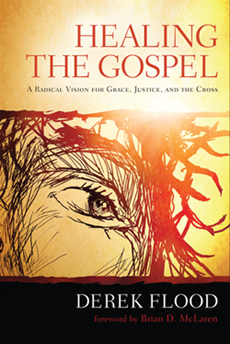
"I was first introduced to your writing with the Sojourners article early this year. Your blog has been very helpful and inspiring. Healing the Gospel was one of the healthiest theological books I've ever read. Even though I tend to agree with all of your sentiments in your book, I think it is even helpful for individuals who strongly disagree with you; due to your demeanor and thoughtfulness--your intentions and heart were apparent and that alone is capable of spreading light to others.

I enjoyed your treatment of Romans 1 and 6; and I resonate with the idea that God's wrath is essentially the natural consequences of sin, whether the sin is our own or other's. I was wondering if you have ever written on Hebrews 10:30 or 2 Thessalonians 1:6-7. In those verses, it seems as if the wrath/vengeance/payment is more of an active role, rather than a passive consequence. Those verses have been difficult for me to reconcile with my view of God's forgiveness and non-violence. I understand that justice is pain for the unjust, but the 1st Chapter of 2 Thess doesn't seem to scream out restoration and reconciliation. I want to take all of scripture in context, but now I find myself wanting to throw these verses out because they don't fit into my current theological framework (I don't see much Jesus in these words)."

- Geoffrey H.

It's a great question. For sake of space, I'll focus here on the passage from 2 Thessalonians. The key part Geoffrey is referring in verses 6-7 is this statement:

"For it is indeed just of God to repay with affliction those who afflict you."

Here we have a classic statement of payback justice. An eye for an eye. Repaying hurt for those who hurt.

But didn't Jesus repudiate an eye for an eye in the sermon on the mount, replacing it with the way of enemy love?
So is this verse a contradiction to that? Is it promoting the very way Jesus rejected?

Let's take a look at the whole passage for context:

"We ourselves boast of you among the churches of God for your steadfastness and faith during all your persecutions and the afflictions that you are enduring. This is evidence of the righteous judgment of God, and is intended to make you worthy of the kingdom of God, for which you are also suffering. For it is indeed just of God to repay with affliction those who afflict you, and to give relief to the afflicted as well as to us, when the Lord Jesus is revealed from heaven with his mighty angels in flaming fire, inflicting vengeance on those who do not know God and on those who do not obey the gospel of our Lord Jesus. These will suffer the punishment of eternal destruction, separated from the presence of the Lord and from the glory of his might." (2 Thes 1:4-9, NRSV)

Yuck.


The first thing we notice is the violent language. "flaming fire, inflicting vengeance... suffer the punishment of eternal destruction." However we understand the phrase "eternal destruction,"--whether we understand that to mean eternal torment, annihilation, or something else--it is pretty clear that the audience is supposed to feel comforted knowing that the people who are hurting them are gonna "get what's coming to them." This is about appealing to people's desire for vengeance. So why would they feel that way?

If we look at the beginning of this passage, we read that the church in Thesselonia was undergoing persecution and oppression, "all your persecutions and the afflictions that you are enduring." From this context we can make a few observations:

First, this is not an endorsement of people seeking violent retribution. Unlike the Old Testament which does seem to endorse people committing violence in the name of God, the NT consistently calls on followers of Jesus to not retaliate, to not return harm for harm. This is no exception. This is a letter to a persecuted church that is practicing non-retaliation and suffering as a result, helping them cope with that, encouraging them to stay the course of nonviolence.

That brings us to the second insight: What is said here is intended to be a comfort to them in their suffering. It was supposed to make them feel better to know that their enemies would suffer. It may shock and disturb us now--That's important for us to recognize, and I'll return to that in a moment-- But it was originally intended to encourage them.

For us to wrap our heads around this, it's important to understand the broader cultural context of their time: This was a world where compassion and humility were not considered to be character traits, but immoral weaknesses. The idea of payback justice was self-evident both to Greco-Roman thinking as well as to the Jewish mindset. Today we live 2000 years after Jesus, and a lot of his values have sunk in. Love of enemies is still counter-cultural today, but back then it was literally unheard of. This was an idea that originated with Jesus, and it flew in the face of everything their Greco-Roman and Jewish religious culture told them. It was considered crazy, blasphemous, scandalous, foolish.

Consequently, to their thinking, to go from "I want to kill you" to "I will trust that God will kill you" was a big step foreword. However, for many of us today it seems like a step backwards now. Once we really start trying to love our enemies, praying for them, "blessing and not cursing" as Jesus says, this results in our developing compassion for them. We come to desire their good, not their harm. We come to have the heart of Jesus.

Jesus tells us in fact that this love is a reflection of God's heart who is our model for enemy love, encouraging us to "be perfect as your heavenly father is perfect." God's "perfection" here, Jesus tells us, is seen in God's demonstration of enemy love. Paul says the same thing: "God demonstrates his own love for us in this: While we were still sinners, Christ died for us." (Rom 5:8).

So if we have a problem with this verse, it is not because we are rebelling against God. It is precisely because we have been following in the way of God in Christ, and because our heart has been changed to see things as Jesus does that we now stumble over this passage! What was intended as a way to help suffering people cope with their feelings of revenge, is now seen by us as making God look unlike Jesus. We have learned to embrace the way of Jesus, and believed that this was a reflection of God's true heart and character revealed in Christ. But this passage appears to say that God does not look like that, and does not follow the way of Jesus.

So we stop. We struggle. We question. And I think rightfully so!

After all, wasn't Jesus constantly questioning things like this? That's what got him in such hot water with the religious teachers. He even directly challenged commands like "an eye for an eye" (the very premise that this passage in Thessalonians is based on!) claiming that because God loves his enemies so should we. So, in contrast to what this above passage seems to say, Jesus says that there is not a double standard between how we are to act and how God acts. According to Jesus, God is the model for enemy love.

This passage also flies in the face of what Paul says. But wait a second, didn't Paul write this letter? Many scholars suspect that he did not, and one of the major reasons for this is that this passage just doesn't sound like something he would say. Typical for Paul is to present the "foolishness" of the gospel, to go against the cultural assumptions of payback justice, to promote the radical way of love over law, all in keeping with the message of Jesus. This passage doesn't fit with that. It doesn't sound like Paul, let alone Jesus.

But I don't think our criteria should be who said it. If we want to learn to read the Bible like Jesus did, this will involve questioning and wrestling with Scripture, no matter what the source. What I would propose is simple: We should evaluate all Scripture based on merit. As an example, let's look at something Jesus said and apply that principle:

Many people read the Sermon on the mount and understand it to be demanding us to do things that seem really hurtful: telling women to stay in relationships where they are being abused, telling people not to defend themselves, to not resist oppression, to not defend those who are being hurt or wronged.

As much as I believe in nonviolence and following that way of enemy love, I would say that if you are understanding the words of Jesus as wrong and hurtful and against your conscience, then you should not follow them. You should never do something that feels wrong or hurtful. Don't ever violate your conscience. That can cause irreparable harm.

Now I believe that I could intelligently articulate the application of enemy love in a way that would not mean submitting to oppression, but rather actively resisting it. Properly understood, enemy love is not about ignoring suffering, but actively working to alleviate it. But until you can understand this, understand how it is good and right, you should never simply blindly follow that way, even if it comes from Jesus himself. Because that can, and often has, lead to misapplying these principles, and thus promoting deeply hurtful things that are the opposite of what Jesus intended. That's what happens when we do things blindly. That's how the Pharisees read their Bibles, and why Jesus was so opposed to that way of reading.

Our priority needs to be on doing what is loving over blind obedience to commands. That is precisely the focus Jesus (and Paul) had. So we need to do things because they are good, and not simply because "those are the rules" or "the Bible says so" or even "Jesus says so."

Now let me stress here that I am not saying that we should simply do whatever we feel like doing. This is not a license for selfishness. My assumption is that we are trying to live our the way of Jesus the best we know how, not find an excuse to live out the values of Snooki from Jersey Shore. Paul councils us, "Do not conform to the pattern of this world, but be transformed by the renewing of your mind. Then you will be able to test and approve what God’s will is—his good, pleasing and perfect will" (Rom 12:2). As we live in the Spirit, as we develop in our relationship with God, we come to have the mind of Christ, we come to think and see like Jesus.

The key here is that we engage our brains and hearts, rather than shutting them down. We don't do things blindly (as if we don't know Jesus, and are just following a book). Rather, we seek to develop the mind of Christ so that we "will be able to test and approve what God’s will is." Note those words: test and approve. In other words, we can evaluate Scripture on its own merit.

That means that while we should not follow something that seems hurtful to us, we should however stay open to understanding it in a healthy way. So if Jesus' way of love of enemies can be demonstrated to make sense and work (and I am convinced it absolutely can), then we should follow it. If it can be demonstrated that Jesus' way of restorative justice does a better job at addressing the deep problems we have than the way of an eye for an eye, (and again we are seeing tons of evidence that this is true too), then we should apply it.

It's a very simple exegetical principle: Evaluate on merit. Test and approve. Follow what you understand. Remain open to learn and grow. Honestly, that's how most of us already read the Bible. We highlight and underline the parts that speak to us, and skip over the parts that don't. The major difference is that rather than doing this unthinkingly (and perhaps pretending we aren't!) I am proposing we do it purposely and intelligently, and with the intention of developing the mind of Christ and following in his way.

Consequently, when we run into a verse that strikes us as wrong (especially ones that seem to fly in the face of what we have learned from Jesus and his way!) such as this one in Thessalonians or the one that says that women should never teach men (which lots of scholars also doubt Paul wrote by the way), then we should apply that same test that we did to the Sermon on the Mount: We should evaluate it on its own merit.

We ask: Is it compelling? Does it help us love better? To act more like Jesus? To open our hearts to God in trust?

As I see it, this passage in Thessalonians fails those tests. Perhaps it did all of these things in its original context, as a way to help people steeped in a culture of retribution to cope with their need for violence. But it seems to do the opposite now. It pulls me away from Jesus, and tethers me to the very broken way of seeing the world that Jesus was trying so hard to help us all move away from. It's a good step forward for those who are still stuck in the thinking of payback justice, but it pales in comparison of the God revealed in Christ.

If we can allow that the people who wrote the Bible were human like us, that they (like us) were not immune to their own cultural blinders, that they (like us) had different levels of insight into the depths of Christ's love and way... then we can look for the good in what they wrote, and pass over the not so good.

As Paul says in his (undisputed) 1st letter to the Thessalonians,
"Test everything. Hold on to what is good. Reject what seems bad"
(1 Thesselonians 5:21-22).

Labels: , , ,

My article in Sojourners on wrestling with violence in the Bible

Monday, December 12, 2011

My feature article just came out in the latest edition (Jan, 2012) of Sojourners Magazine. It is called:

"The Way of Peace and Grace: How Paul wrestled with violent passages in the Hebrew Bible"

You can read it online at the SoJo website for free (you just need to register).
EDIT: For those who don't want to register, here's a direct link to a
PDF of the article

As the title suggests, it deals with how we can faithfully wrestle with really disturbing passages in the Bible that seem to advocate and even command committing violence in God's name. As I've mentioned before, most commentaries tend to either justify or downplay these passages. What I propose is a very different approach: if we learn to read the Bible the way that Jesus and Paul did, we can deal with them like they did.

In the Sojourners article I deal in particular with how Paul wrestles with violent passages from the Old Testament, disarming them and putting them under Christ. You'll need to read the article for the details, but Paul's approach is pretty awesome. If Paul read the Old Testament like this, then I think its fair to say we would be on pretty solid ground if we read it that way too.

I'm really excited about this article, and am thrilled to finally be able to share it. As far as I know, it represents a unique contribution to biblical scholarship. I've found scholars making similar conclusions about Paul, buried in the middle of some obscure footnote in a dense technical commentary, but I have not seen anyone connect all the dots like this. In fact, books like the Commentary on the New Testament Use of the Old Testament miss (or intentionally omit?) this pattern in Paul's reading entirely, even though Paul does this constantly. In doing so, they completely miss how Paul reads his Bible and arrives at a gospel of grace that is so different from how he previously read his Bible before his conversion to Christ.

What's more important than scholarship though is how we, as followers of Christ, read the Bible as Scripture. Adopting Paul's way of wrestling with these violent passages opens up a way for all of us to read the Bible that does not force us to check our conscience at the door. Jesus and Paul didn't, and neither should we!

So if you've ever wondered how Jesus or Paul could have read the Old Testament and arrived at a loving, radically grace-focused understanding of God, then check out the article.

Labels: , , , , , ,

Does Defending the Bible Mean Advocating Violence?

Monday, November 28, 2011

There are many unsettling passages in the Bible. Consider these two verses that you will probably never hear read from the pulpit on a Sunday morning:

"This is what the Lord Almighty says ... attack the Amalekites ... Do not spare them; put to death men and women, children and infants" (1 Samuel 15:2-3).

"O daughter Babylon ... Blessed is the one who seizes your infants and dashes them against the rocks!" (Psalm 137:8-9).

Note that these passages are not simply about God's judgment. They are commands for people to kill other people in God's name -- to kill infants in fact. How can we, as Christians, reconcile passages like these with the God revealed in Jesus who commands us to love our enemies? The two pictures could not be further apart.

Many biblical scholars attempt to defend Scripture by downplaying or justifying the violence in some way. The 1984 Bible Knowledge Commentary, for example, argues that the genocide recorded in the battle of Jericho was justified so that Israel would not be "infected by the degenerate religion of the Canaanites," declaring that "pure faith and worship" could only be maintained "by the complete elimination of the Canaanites themselves." This argument bears a chilling similarity to those used by the Third Reich. Yet, this seems to be completely lost on the above commentator.

Commenting on the Psalm above, the more recent 2008 Two Horizons commentary suggests that this prayer would be less more palatable to us if it we thought of it in more abstract terms: "The modern reader ... would be much less troubled by the simple statement that it would be good when the evil Babylonian empire came to its divinely predicted end." In other words, atrocities and violence are less disturbing when its victims are thought of in impersonal and abstract terms. Wow.

It is frankly hard to imagine anything more morally abhorrent than smashing a baby's heads against rocks, or committing genocide in God's name. Such actions are simply and always categorically unjustifiable. It would be hard to conceive of something more self-evident than this. In fact, the only reason one would even think to question this is because of an a priori belief that biblical commands override conscience. When the Bible helps us challenge and deepen our moral vision and character this is surely a good thing, but when it leads us to abandon our most basic notions of morality, something has gone horribly wrong. The fact that so many biblical commentaries continue to attempt to justify the biblical genocide accounts reveals a profoundly disturbing disconnect between biblical scholarship and ethics.

So what causes otherwise decent and loving people like this to defend genocide in God's name? I think the problem lies in the basic approach they take to reading the Bible, which seeks to show how it all fits together in harmony. It's not just conservative scholars either; I was taught this same approach, and I'd bet you were too. In a way, it makes sense: If the Bible is the inspired word of God, then shouldn't it have one consistent message? So we seek to read in a way that weaves all these disparate parts together and end up with a rather schizophrenic picture of God. As we can see, when applied to passages like the ones above it leads otherwise decent people to become advocates of appalling moral atrocity. And what is perhaps even more shocking, they think that in doing so they are defending God's honor by defending the Bible.

I'd like to propose another way of reading the Bible that, rather than trying to justify everything the Bible says, instead seeks to identify a trajectory of moral development, and then follow in that same trajectory. I'll illustrate this principle with two examples:

The first is the Apostle Paul's core message that the Gospel is available to both Jews and Gentiles. Now, if we read the Bible with a proof-texting approach, we would need to conclude that Paul is out of line with Jesus here whose ministry was focused on his fellow Jews. As Jesus put it when a Canaanite woman appealed to him to heal her son, "I was sent only to the lost sheep of the house of Israel" (Matthew 15:24). We do not see Jesus establishing a new religion, but rather him reforming his own. Paul in contrast breaks with Jewish law in order to open up the Gospel to all people, going beyond the boundaries of religion. So there seems to be a conflict here that many scholars have noted.

However, if we look at the teachings of Jesus we can also see a trajectory he sets away from nationalistic and racial boundaries. He expands the definition of "family" to include "everyone who does the will of God" as his true "brothers" (Luke 8:21). Here he is redrawing familiar boundaries of solidarity to go beyond family, tribe or nation. All the more, Jesus was known for siding with the sinner, the outcast, the marginalized, the least. Perhaps the most striking example is his well known command to "love your enemy" which completely shatters all categories of "us vs. them" thinking.

Looking at this trajectory Jesus sets up, we can see that Paul, in expanding the Gospel beyond the confines of his own religion is in fact following Jesus in that same trajectory. He is taking it farther than Jesus did, but in doing so he is following in the trajectory Jesus set. Based purely on building proof-text evidence of what Jesus taught, there is insufficient grounds for Paul to declare that followers of Jesus no longer need to be circumcised or to follow the food laws of Moses. What Paul is doing, however, is not following the letter, but the spirit of what Jesus taught. This allows him to run with it, and to take it to places beyond where Jesus did, following in that same trajectory.

Next, consider the example of Martin Luther King Jr. and the civil rights movement. King looked to the Bible as his inspiration. However, it would be hard to make a clear case for the abolition of slavery from a proof-texting approach to the New Testament. One can find verses that seem to support it, and others against it. Yet, Christians today take it as self-evident that slavery is wrong and even sinful. Again, what we see King doing (and all of us doing with him) is an example of following in the trajectory set by the New Testament that declares that "There is neither Jew nor Gentile, neither slave nor free, nor is there male and female, for you are all one in Christ Jesus" (Galatians 3:28). Looking at how Paul championed opening up the Gospel to all peoples, it's a safe bet that he would have cheered King in his seeking equality for all people regardless of race. Again, King was going beyond where Paul went, but he was following in the same trajectory.

Returning to the violent passages mentioned at the outset of this article, it is rather clear that there has been a clear shift from the time of their writing to Jesus' command to love our enemies. There is a clear and obvious discontinuity here between these two understandings of God. What we see here is a major change in trajectory within the Bible itself that leads us away from a violent tribal conception of God, and towards a God seen in Jesus that demonstrates enemy love.

If we read the Bible as a proof-text, then we will find there are passages that command violence in God's name, and those that forbid it. However, if we instead step back, taking a larger narrative view that recognizes the Bible's developing trajectories, then we do not need to try and justify or embrace these violent passages any more than we need to cling to passages that advocate slavery (or food laws for that matter). Rather, we look to identify the upwards trajectory away from violence, oppression and dehumanization that the biblical record chronicles.

Jesus said, "Very truly I tell you, whoever believes in me will do the works I have been doing, and they will do even greater things than these" (John 14:12). If that's true, then perhaps faithfulness to Scripture does not mean holding on to it with clenched fists and white knuckles no matter how wrong it seems. Maybe it instead means learning to make it soar by following in the trajectory it sets. Maybe it means we do not need to get stuck in the old, but can faithfully follow its trajectory into the new.

Labels: , ,

The More I Follow Jesus, the Less I Like His Teaching

Friday, September 02, 2011

Over the years I have been increasingly troubled by the doctrine of Hell. As my love for God and my neighbor increased, the horror at the thought of many of those I love suffering eternal punishment had increased with it. In other words, this was not a crisis of faith, it was the result of my faith. The more I experienced God's grace in my life and grew to share Jesus' heart for the lost, the more I was troubled by Hell.

Now what makes this even more complicated is the fact that most of the statements about Hell found in the Bible are said by Jesus. The one who is leading me to question Hell, is the very one who teaches it. Similarly, Jesus is known for preaching love of enemies and nonviolence, yet many of his teachings use very violent imagery. Again, how can we understand these apparent contradictions? How can we think of Jesus as compassionate and loving when he says such harsh things?

There's a movement among emerging folks like me to focus on the teachings of Jesus over the doctrines of Paul as a way to get away from legalism and back to grace. I like the idea of getting to grace, but I've always had a problem with this for two reasons: First of all, Paul is all about grace, and any legalistic dogmatic interpretation of him is a misinterpretation. Second, Jesus (as we have seen) is anything but easy to interpret. In fact, if one takes a literalistic approach to the teachings of Jesus they are sure to come up with the most un-Christlike teachings imaginable. So in light of that, I'd like to offer a more sophisticated approach to interpreting the teachings of Jesus that take all of this into account.

Let's begin with the parable of the unmerciful servant (Mt 18:21-35). Jesus tells the story of a king who forgives his servant for a huge debt, but then when he hears that this same servant has refused forgive very small debt, the king becomes enraged. Jesus tells us that the king "handed him over to the jailers to be tortured, until he should pay back all he owed." and the concludes “This is how my heavenly Father will treat each of you unless you forgive your brother or sister from your heart.”

Now the debt the servant owed was basically unpayable. Scholars say that it was more money that an entire kingdom would have had, and so it would be like us saying "a zillion dollars" meaning he would never be able to pay it, and would thus be tortured forever. So are we to conclude from this that if we don't forgive others that God will torture us in hell forever? It is crucial here to look at the context: Jesus tells this parable in response to a question from Peter were he asked Jesus "how many times must I forgive, seven times?" Jesus answers "no, seventy -seven times" (v. 21-22). So if we read this like an accountant we would need to conclude that we should forgive 77 times, but God does not do this. God (according the parable here read in a pedantic fashion) does not even forgive seven times like Peter suggests, or two times for that matter. Just one chance and then that's it. God here appears at first infinitely merciful, forgiving a huge debt, and then suddenly flips and wants to torture us forever.

Does God suffer from some form of borderline personality disorder where he is at first loving and forgiving, and then suddenly becomes brutal and merciless? Are we more merciful than God? No, this is a parable, and a parable is essentially a loose analogy. As everyone knows, if any analogy is pressed too far it becomes absurd (as we can clearly see here). The broad point Jesus is making here is that it would be really horrible if we were forgiven a great debt, but then turned around and were merciless to others. We should treat others with the same grace that we need, and which God has richly shown us.

This is an interpretation that fits with the overall point of this pericope. To read it literalistically would mean that the point Jesus was making to Peter was completely undermined by Jesus' own parable -- be merciful as your Heavenly Father is... who is not merciful at all! Clearly, that cannot be what Jesus was trying to convey. To understand Jesus we need to listen to context of his larger point which is always about showing mercy to others, about radical unconditional grace.

Now, so far I've just been following rules of basic biblical interpretation -- considering genre (a parable), reading a passage in context (explaining to Peter why we should forgive more than seven times), and focusing on authorial intent (teaching that we should show great mercy as God has shown us great mercy). Let's take that a step further now: In the above parable Jesus compares God to a king who -- in the way dictators do -- flies into a rage and orders torture for an ungrateful servant. Yet if we keep reading in Matthew, we see that a couple chapters later, Jesus questions the entire idea of comparing God to a king. "You know that the rulers of the Gentiles lord it over them, and their high officials exercise authority over them. Not so with you. Instead, whoever wants to become great among you must be your servant, and whoever wants to be first must be your slave — just as the Son of Man did not come to be served, but to serve, and to give his life as a ransom for many" (Mt 20:25-28). In other words, Jesus models the way of God, not as one who "lords it over others" but as the servant Lord, and calls for us to embody that way too. Following Jesus means rejecting the way of domination, the way of kings.

So to the extent that you have embraced that idea, you will have a problem with the above parable of the king. You'll read "God is like an angry king" and think "No, Jesus teaches us that God is not at all like a king, God is like a suffering servant," and you would be absolutely right. In each of these parables, Jesus is turning our thinking upside down. He begins by turning the idea of payback on its head. When he says "not seven times, but seventy-seven" he is alluding to a passage from the Old Testament where Lamech says "If Cain is avenged seven times, then Lamech seventy-seven times" (Gen 4:24), and reversing it. Jesus replaces escalation of violence with the escalation of mercy. In the second parable he is similarly dismantling our understanding of greatness, and redefining how we see God. God is the servant. Power is about lifting people up, not pushing them down.

In doing this, Jesus not only dismantles our traditional concepts of what justice and power are about, at the same time, he also dismantles his own parables. Once we have embraced Jesus' understanding of servant lordship, we cannot accept the crude comparison of God to a volatile dictator. So when reading these parables as disciples of Jesus, we need to keep in mind that each one is beginning with the assumptions of the crowds. He begins there, with their familiar ideas of kings and slaves and torture and then introduces a radical new idea into the mix which flips one of those ideas on its head. The more we embrace these ideas of Jesus' "upside-down kingdom," the more we will have trouble with the worldly assumptions that these very parables are situated in. That's not because we are disagreeing with Jesus here, but because we have fully embraced his new way of thinking. So the more we follow Jesus, the more we'll question the worldly values the parables are set in. That is, we can embrace the idea of forgiving a great debt (which is the point Jesus is making), but reject the idea that God is a torturing dictator (which reflect the worldview assumptions of his first century audience -- assumptions Jesus is repeatedly challenging).

That means that when we read statements about Hell and "torture," we need to ask whether these are the main point Jesus was trying to teach, or whether it is in fact part of the worldview that the people had already accepted -- like they had slavery and dictatorship -- which Jesus is dismantling bit by bit.

Consider the parable of the sheep and goats just a few chapters later in Matthew (Mt 25:31-46). Here we hear Jesus make some very harsh statements about Hell, "Depart from me, you who are cursed, into the eternal fire prepared for the devil and his angels" (v. 41). But again, what is the central point that Jesus is illustrating here? It is not a description of how the last judgement will look. That is the assumed setting, just as the first parable we looked at assumed a king and servants. Here Jesus is drawing on the familiar apocalyptic imagery of his Jewish audience, and once again he is turning the tables: The righteous will not be determined because they are part of the right race or religion (as his audience thought), but rather by how they love the least. Jesus redefines what makes a person "in" or "out" -- you are in if you care for those who are out. In doing this, he tears down the very barrier separating insiders from outsiders. Once again, he begins with a common assumption (the image of the final judgement) and turns it on its head: you show your allegiance to God by how you love those who are condemned.

If you study all the passages that allude to hell in the Gospels, you will see this pattern over and over: Jesus is not in fact teaching "this is the way hell is" any more than he is teaching "God is like a emotional dictator." Rather, these are the people's assumptions that he begins with in order to introduce a radical new idea focused on grace. That's how we need to read Jesus, and that's a point that even many biblical scholars miss. Because in order to really get it, you need to follow. You need to adopt the way of Jesus, and let his heart become your own. The more I do that, the less I think God looks like a king or a judge, and the more I think God looks like Jesus who redefines all those terms, and indeed redefines how we conceive of God.

Labels: , , , ,

This website and its contents are copyright © 2000 Derek Flood, All Rights Reserved.
Permission to use and share its contents is granted for non-commercial purposes, provided that credit to the author and this url are clearly given.